How Long Should You Use Infrared Therapy Per Session?

Time:2026-05-16 Author:Liam
0%

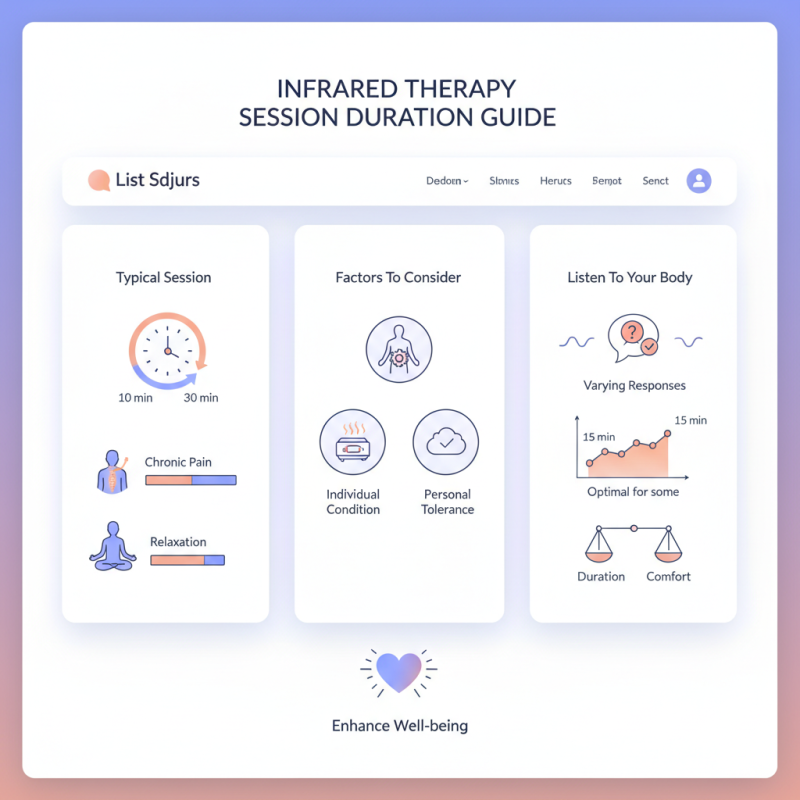
Infrared therapy has gained popularity for its potential health benefits. Many individuals seek to understand how long to use infrared therapy per session. Proper duration is crucial for maximizing efficacy and ensuring safety. It can be challenging, as responses to therapy may vary widely among individuals.

Experts suggest that a session typically lasts between 10 to 30 minutes. However, factors such as the individual's condition, the type of infrared device, and personal tolerance play vital roles. For instance, someone with chronic pain may need longer sessions compared to someone using it for relaxation.

Listening to your body is essential. Some may find 15 minutes optimal, while others may require more time. It's important to reflect on your experiences, taking note of what feels right for you. Remember, the goal is to enhance well-being, not to overextend oneself. Balancing duration and comfort is a key part of a successful infrared therapy routine.
How Long Should You Use Infrared Therapy Per Session?

Understanding Infrared Therapy: An Overview of Benefits and Uses

Infrared therapy is gaining attention for its numerous health benefits. It uses infrared light to penetrate the skin, helping to relieve pain, reduce inflammation, and enhance overall well-being. This therapy can also promote relaxation and improve circulation. Many users report feeling rejuvenated after sessions, making it a popular choice in wellness routines.


Tips for effective use of infrared therapy include:
Monitoring your time spent. For beginners, starting with shorter sessions of about 10-15 minutes is recommended. It helps your body adjust without overwhelming it. Gradually, you may extend your sessions to 30 minutes. Always pay attention to how your body reacts.


Staying hydrated before and after therapy can enhance the experience. Drink water to support detoxification processes activated during treatment. Experimenting with different temperatures may also fine-tune your experience. Some find lower settings more comfortable while still reaping benefits. An open mind and a little patience can lead to the best results.

Recommended Session Durations for Optimal Infrared Therapy Results

Infrared therapy is becoming increasingly popular for its potential health benefits. To optimize results, session duration is crucial. Research suggests 20 to 30 minutes per session is ideal for most individuals. This timeframe allows the body to absorb the infrared rays effectively. Users may need to adjust based on personal comfort and specific health conditions.

Each session can vary in intensity. Some may benefit from a shorter, more intense exposure, while others require longer periods at a milder heat. It's essential to listen to your body. Overdoing it can lead to fatigue or discomfort. Keeping track of how you feel after each session can help fine-tune your ideal duration.

Make sure to stay hydrated before and after each treatment. Hydration enhances circulation, aiding the infrared effects. It's also wise to start with lower durations if you're new to this therapy. Consider documenting your sessions and responses to identify patterns for improvement. Reflecting on these experiences can lead to more effective therapy over time.

How Long Should You Use Infrared Therapy Per Session? - Recommended Session Durations for Optimal Infrared Therapy Results

Treatment Area Recommended Session Duration (minutes) Frequency per Week Optimal Temperature (°F)
Full Body 30-45 3-5 120-130
Localized Treatment (e.g., back pain) 15-20 4-6 100-120
Facial Treatment 10-15 3-4 95-105
Sports Recovery 20-30 2-4 110-125

Factors Influencing the Length of Infrared Therapy Sessions

Infrared therapy can significantly benefit those seeking pain relief or improved circulation. However, the duration of sessions isn't one-size-fits-all. Several factors can influence how long you should use infrared therapy each time.

The intensity of treatment plays a crucial role. Higher heat levels may require shorter sessions to prevent overheating. User comfort is also important. If you’re new to infrared therapy, start with shorter sessions. Assess how your body reacts before gradually increasing the duration.

**Tips:** Track your progress. Maintain a journal to note any changes in pain levels or discomfort. This might help you find the right duration.

Consider your health status, too. Those with certain medical conditions may require tailored session lengths. Consult with a health professional. Their expertise can guide you in making safe adjustments. Listen to your body; it often provides the best feedback.

Industry Guidelines on Frequency and Duration of Infrared Treatments

Infrared therapy has gained popularity for its therapeutic benefits. Understanding the appropriate duration and frequency of sessions is essential. Industry guidelines suggest that sessions typically last between 20 to 40 minutes. Research indicates that this duration allows effective penetration of infrared rays into body tissues, promoting relaxation and pain relief.

Frequency of treatments can vary based on individual needs. Many practitioners recommend starting with 2 to 3 sessions per week. Some patients report feeling optimal benefits after consistent use for several weeks. However, individual responses may differ. Some might need less frequent sessions, while others may benefit from daily use. It’s important to listen to your body and adjust accordingly.

Monitoring your progress is key. Tracking changes in pain levels or overall well-being can guide treatment adjustments. A journal can be helpful for this. Remember, too much of a good thing can lead to diminishing returns. Reflection on your therapy outcomes ensures a tailored approach. It keeps your infrared therapy sessions effective and aligned with your personal health goals.

Infrared Therapy Session Duration Guidelines

This bar chart illustrates the recommended duration of infrared therapy sessions based on different treatment goals. The duration may vary based on individual circumstances and needs.

Safety Considerations and Potential Risks in Infrared Therapy Sessions

Infrared therapy is gaining popularity for its health benefits, but safety is paramount. While many people experience positive outcomes, it’s essential to be aware of potential risks. Some users report skin irritation after prolonged exposure. This can vary based on skin sensitivity and the intensity of the infrared light. Monitoring your skin's reaction is vital.

Also, be cautious if you have certain health conditions. Individuals with heart issues or sensitivity to heat should consult their healthcare provider before starting sessions. Dehydration is another risk, especially after extended use. Drinking water can help mitigate this, but it’s easy to forget during a treatment session.

Each person's experience with infrared therapy can differ widely. Some achieve rapid results, while others may not notice significant changes right away. Keeping realistic expectations helps in assessing your sessions. Listening to your body is crucial. If you feel discomfort, reducing the duration of your sessions may be wise. It’s about finding the right balance for your unique situation.

FAQS

: What is infrared therapy?

: Infrared therapy uses infrared light to penetrate the skin, providing health benefits like pain relief and relaxation.

How long should a beginner's session be?

Beginners should start with sessions of about 10-15 minutes to help the body adjust comfortably.

Can hydration affect the therapy experience?

Yes, staying hydrated before and after therapy can enhance the experience and support detoxification.

How can I track my progress with infrared therapy?

Maintain a journal to note changes in pain levels or discomfort, which can help you find the right session duration.

What factors influence session length?

Intensity of treatment, user comfort, and individual health status play crucial roles in determining session length.

Is it safe to increase session duration quickly?

No, it’s important to assess how your body reacts and gradually increase the duration to prevent discomfort.

What should I do if I feel uncomfortable during therapy?

Listen to your body. If you feel uncomfortable, consider reducing the session length or intensity.

Do I need to consult a professional before starting therapy?

Yes, especially if you have specific medical conditions that may require tailored session lengths.

What temperatures should I experiment with?

You can try different heat settings; some individuals find lower temperatures more comfortable while still enjoying benefits.

Can infrared therapy really help with relaxation?

Many users report feeling rejuvenated and relaxed after sessions, but results can vary from person to person.

Conclusion

Infrared therapy has gained popularity due to its numerous health benefits, including pain relief, improved circulation, and enhanced relaxation. Understanding how long to use infrared therapy per session is crucial for achieving optimal results. Recommendations suggest that typical session durations range from 20 to 45 minutes, depending on individual needs and treatment goals.

Factors such as the severity of the condition, individual tolerance levels, and the specific type of infrared therapy being used can influence the ideal session length. Additionally, industry guidelines recommend maintaining a balance between frequency and duration to maximize the effectiveness of infrared treatments while ensuring safety. It is important to consider potential risks, such as overheating or skin irritation, thus adjusting session lengths and adhering to safety precautions is essential for a rewarding experience in infrared therapy.

Liam

Liam

Liam is a dedicated marketing professional with a profound expertise in the industry, where he excels at highlighting the unique advantages of our core products. With a keen understanding of market trends and consumer needs, Liam frequently updates our company’s professional blog, providing......