China Top Pressure Relief Mattresses What to Look For?

Time:2026-10-04 Author:Sophia
0%

Choosing among China’s top pressure relief mattresses requires more than comparing prices, thickness, or attractive product photographs. A mattress can look supportive in a showroom yet feel hot, unstable, or too firm after several hours. The real question is what to look for in a pressure relief mattress when comfort, durability, and user safety all matter. Buyers should examine material quality, pressure distribution, ventilation, cover design, and cleaning requirements before making a decision.

Experienced suppliers often discuss foam density, layered construction, air-cell design, and weight capacity in practical terms. These details affect how the mattress responds around the shoulders, hips, heels, and lower back. Ask for test reports, product specifications, sample units, and clear warranty terms. Independent testing can provide useful evidence, but paperwork alone cannot replace hands-on evaluation. A sample should be checked on an adjustable bed, under realistic weight, and after repeated use.

Chinese manufacturers offer many options, from memory foam and gel-infused foam to alternating-pressure air systems. Each design has limitations. Foam may retain heat, while an air mattress may produce noise or require regular electrical support. Cleaning seams and valve areas can also become difficult. Small details matter. A loose cover, weak zipper, or poorly explained pump setting may cause frustration later.

Reliable sourcing depends on asking precise questions and verifying consistent answers. Buyers should confirm production experience, quality-control procedures, material traceability, and after-sales support. Healthcare professionals may also help match mattress features with individual mobility and pressure risks. No single model suits everyone. Careful comparison, realistic testing, and honest reflection usually lead to a safer, more informed choice.
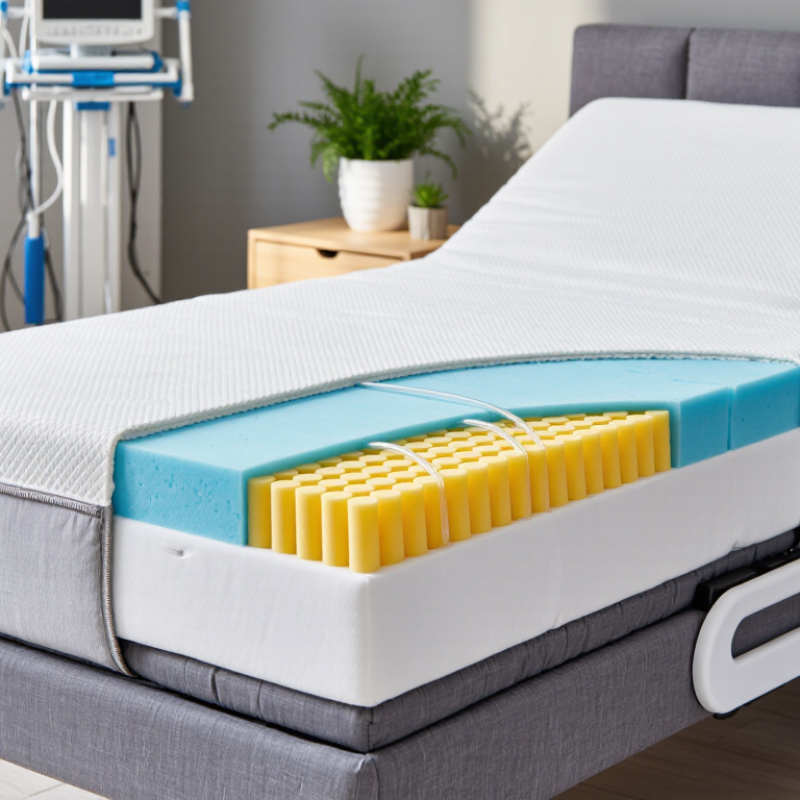
China Top Pressure Relief Mattresses What to Look For?

Types of Pressure Relief Mattresses Made in China

China-made pressure relief mattresses usually fall into four practical types. High-density foam models spread body weight quietly and suit home care or stable-risk users. Alternating-pressure air mattresses use changing air cells, often every six to twelve minutes, to reduce continuous loading. Low-air-loss systems add airflow beneath the patient, helping manage heat and moisture. Hybrid mattresses combine foam with air sections, but their pumps require careful testing.

AHRQ reports that pressure injuries affect about 2.5 million patients annually in U.S. acute-care settings, with estimated costs of $9.1–$11.6 billion. That figure explains why mattress selection needs clinical reasoning, not only a low price. The International Pressure Ulcer Guideline recommends matching support surfaces to mobility, skin condition, moisture, and repositioning ability. Chinese manufacturers commonly offer adjustable air pressure, quiet pumps, washable covers, and load ratings from roughly 100 to 200 kilograms. Specifications still need verification.

During factory evaluation, check cell inflation time, pump noise, emergency deflation, seam strength, and cover breathability. Ask for test records under the stated maximum load. One overlooked detail is power failure protection. A backup valve or repair kit can matter during a long night. Foam density alone does not prove pressure redistribution. Neither does a high air-cell count. Independent testing against recognized safety and durability standards provides stronger evidence than catalogue language. Some products may look clinically advanced but feel unstable when a user turns. That weakness deserves honest review.

China Top Pressure Relief Mattresses: What to Look For?

Types of pressure relief mattresses commonly manufactured in China, compared by representative mattress thickness. Actual specifications vary by construction, load capacity, and intended care setting.

Typical specification ranges used for comparison: high-resilience foam 12–20 cm, alternating-pressure air 8–20 cm, static air 10–20 cm, gel/foam hybrid 15–23 cm, and water-filled 15–20 cm. When selecting a supplier, also check weight capacity, pressure-adjustment controls, waterproof cover quality, cleanability, noise level, repairability, and applicable medical-device certifications.

Key Materials and Technologies for Pressure Redistribution

China Top Pressure Relief Mattresses: What to Look For?

Choosing a pressure relief mattress starts with its pressure redistribution system. Memory foam uses body heat and weight to create immersion, reducing force around the shoulders, hips, and heels. High-resilience foam offers firmer support and easier movement. Air-cell systems adjust internal pressure, which can help users with limited mobility. However, softer is not always better. Excessive sinking may restrict turning and increase heat buildup.

Look for a breathable, stretchable cover that limits friction and manages moisture. A waterproof cover is useful, but it should not feel like plastic against the skin. Check the mattress height, user weight range, edge stability, and cleaning instructions. Clinical guidance often recommends matching the surface to mobility, skin condition, posture, and care routines. A pressure map can provide useful evidence, but daily skin checks remain essential.

Tips: Test the mattress in the user’s usual sleeping position. Check whether heels float freely and whether the pelvis feels supported. Listen for pump noise if using an alternating-air model. Confirm the power backup plan. Specifications can mislead. A mattress may perform well in testing but feel uncomfortable at home. Reassess after several nights, especially when pain, sweating, or redness appears. Tiny adjustments matter.

How to Evaluate Comfort, Support, and Body Pressure Relief

China Top Pressure Relief Mattresses: What to Look For?

Comfort should feel balanced, not simply soft. In practical testing, lie on the mattress for at least fifteen minutes. Check whether shoulders, hips, and heels sink evenly. A pressure-mapping test gives stronger evidence than showroom impressions. The NPIAP 2019 Clinical Practice Guideline recommends support surfaces that redistribute pressure, control shear, and manage skin microclimate.

Support matters just as much. A mattress should keep the spine reasonably aligned without creating hard contact points. Adjustable firmness can help different body weights and sleeping positions. However, “zero pressure” is an unrealistic claim. The AHRQ reports that pressure injuries affect about 2.5 million hospital patients annually in the United States. This shows why product evaluation needs clinical caution, not only comfort language.

Ask for test conditions, load ratings, durability results, and cleaning instructions. Foam recovery time matters after repeated compression. Air-cell systems need stable pressure and quiet operation. Listen carefully at night. Small noises become frustrating. Also check whether the cover remains breathable after washing. I would not trust one short demonstration alone. Personal comfort changes with posture, temperature, and mobility. A qualified therapist or clinician should assess high-risk users, because repositioning remains necessary even with advanced support surfaces.

China Top Pressure Relief Mattresses What to Look For? - How to Evaluate Comfort, Support, and Body Pressure Relief

Evaluation Dimension What to Look For Useful Benchmark or Data Range How to Evaluate It Why It Matters for Pressure Relief
Pressure Redistribution A surface that spreads body weight across the shoulders, hips, and torso instead of concentrating force at a few contact points. Low localized pressure and stable support during position changes; exact results depend on body shape, sleep position, and test method. Use a pressure-mapping test with representative users in side, back, and combination sleeping positions. Even load distribution can reduce discomfort at prominent areas such as the shoulders, hips, knees, and heels.
Firmness Medium to medium-firm comfort is often a practical starting point, but the ideal level depends on body weight, posture, and personal preference. A common industry scale is 1–10; many general-purpose mattresses are tested around 5–7, while firmness ratings are not standardized between manufacturers. Compare products using the same firmness scale and test in the user’s normal sleeping position. Too-soft surfaces may allow excessive sinking, while overly firm surfaces may increase pressure at the shoulders and hips.
Support Core A stable base that keeps the spine reasonably aligned without creating hard pressure points. High-density foam, latex, pocketed coils, or a hybrid construction can provide support; performance depends on design and material quality. Check whether the pelvis remains level and whether the lumbar area is supported when lying on the back or side. Proper support helps maintain a neutral posture and reduces the need for muscles to compensate during sleep.
Spinal Alignment The mattress should accommodate the natural curves of the body without allowing the midsection to sag. The shoulder and hip should sink enough for comfort while the waist and lower back remain supported. Have another person check alignment from the side, or use photographs and a straight-line reference through the neck, spine, and pelvis. Good alignment can reduce strain caused by unsupported or twisted sleeping positions.
Conforming Ability Materials should contour to the body without producing a trapped or difficult-to-move feeling. Memory foam usually offers high contouring; latex generally provides responsive contouring; springs offer less surface conformity unless combined with comfort layers. Lie in each normal sleeping position for at least 10–15 minutes and change positions several times. Controlled contouring can improve contact-area support and reduce concentrated pressure.
Ease of Movement The sleeper should be able to turn and get out of bed without excessive sinking or resistance. Responsive latex, springs, and many hybrid designs usually allow easier movement than slow-response memory foam. Test rolling, sitting on the edge, and moving from lying to standing. Easy movement is important for combination sleepers and people who change position frequently.
Edge Support The perimeter should remain stable when sitting or sleeping near the edge. Reinforced foam edges or perimeter coils can improve stability; edge performance should be checked across the full perimeter. Sit on the edge for 30 seconds and lie near the edge in both side and back positions. Reliable edges increase the usable sleeping area and make entry and exit easier.
Motion Isolation The mattress should limit the transfer of movement from one side to the other. All-foam and pocketed-coil designs generally isolate motion better than traditional interconnected coil systems. Place a glass of water on one side while a tester changes position on the other side. Lower motion transfer can help couples sleep with fewer disturbances.
Temperature Regulation Breathable construction, airflow through the core, and moisture-managing covers are preferable for warm sleepers. Open-cell foams, ventilated latex, pocketed coils, and breathable textile covers can promote airflow; no material guarantees a cool sleep experience. Check cover composition, ventilation features, room temperature, and heat retention after several hours of use. Reducing heat and moisture buildup can improve comfort and reduce nighttime awakenings.
Material Density and Resilience Comfort layers should resist early softening and permanent impressions under normal use. Foam density should be reported in kg/m³; higher density often improves durability, but density alone does not determine comfort or safety. Request technical specifications and compare indentation, recovery, and compression results from consistent laboratory tests. Consistent material performance helps preserve pressure relief and support over time.
Height and Layer Construction A sufficient comfort layer should separate the body from the firm support core while maintaining structural stability. Many adult mattresses are approximately 20–35 cm high, but thickness is not a guarantee of pressure relief. Review the thickness, density, and order of every layer rather than judging by total height alone. Layer balance affects contouring, support, airflow, and the risk of bottoming out.
Body-Weight Adaptability The mattress should support the user without excessive sinking or insufficient contouring. Heavier users may need stronger support and greater resistance to bottoming out; lighter users may prefer more surface cushioning. Test with users in the expected weight range and compare spinal alignment and pressure readings. A mattress that works for one body type may not provide the same relief for another.
Sleeping-Position Compatibility Side sleepers commonly need more shoulder and hip cushioning; back sleepers need balanced lumbar support; stomach sleepers generally need stronger midsection support. Use position-specific testing rather than one overall comfort score. Evaluate each position for pressure, alignment, movement, and stability. Pressure and support requirements change significantly with sleeping position.
Durability and Recovery The mattress should maintain height, firmness, and surface uniformity after repeated loading. Look for results from standardized durability or cyclic-compression testing; service life varies with materials, use, and user weight. Review test documentation and inspect seams, quilting, foam recovery, and surface indentation. Loss of resilience can create uneven support and reduce pressure-relief performance.
Cover and Surface Comfort A smooth, breathable, removable cover with secure stitching and suitable stretch can improve surface comfort. A removable cover is convenient for care, but it should not replace a complete mattress protector where needed. Inspect fabric feel, zipper quality, stitching, wash instructions, and potential friction points. The cover directly affects surface softness, airflow, moisture management, and skin comfort.
Certifications and Chemical Disclosure Request verifiable documentation for foam emissions, textile safety, restricted substances, and manufacturing quality. Check current third-party certificates and test reports; verify the certificate scope, product model, and validity period. Confirm that the documents apply to the finished mattress rather than only to an individual raw material. Transparent documentation supports safer purchasing and helps reduce exposure to unsuitable materials.
Odor and Off-Gassing New foam products may have a temporary odor; strong or persistent odor should be treated as a quality concern. Odor intensity and duration vary by material, packaging, ventilation, and storage conditions. Unpack in a well-ventilated area and follow the supplier’s expansion and airing instructions before use. Lower odor improves the initial user experience and indoor-air comfort.
Fire-Safety Construction The finished mattress should meet the fire-safety requirements applicable to its target market. Requirements differ by country and sales channel; obtain test reports for the complete finished product. Verify the applicable standard, test laboratory, report number, and product configuration. Fire performance is an essential safety factor independent of comfort and pressure relief.
Trial, Warranty, and Returns A realistic trial period and clearly written warranty should explain exclusions, sagging limits, stains, and structural defects. Allow sufficient adaptation time, commonly several weeks, while following the seller’s stated return conditions. Read the full policy before purchase and confirm transport, inspection, and return responsibilities. Comfort is personal, so a fair evaluation and return process reduces purchase risk.
Overall Evaluation Method Use comfort, support, pressure redistribution, temperature, movement, and safety results together rather than relying on one score. A practical comparison can assign equal or customized weights according to the user’s priorities. Record test results for each mattress using the same users, positions, room conditions, and measurement procedures. A structured method produces a more reliable comparison than marketing descriptions alone.
Note: Benchmarks are general evaluation guidance. Actual performance varies with mattress design, materials, user body characteristics, room conditions, and test procedures.

Safety, Hygiene, Durability, and Certification Standards

Choosing China’s top pressure relief mattresses requires more than comparing foam density or air-cell height. Safety comes first. AHRQ reports that about 2.5 million hospital patients develop pressure injuries annually in the United States, with estimated costs reaching $9.1–11.6 billion. A suitable mattress should support repositioning, limit bottoming out, and maintain stable pressure distribution. NPIAP guidelines also stress matching the support surface to the user’s mobility, weight, skin condition, and care plan.

Hygiene needs measurable controls. Look for removable covers with sealed seams, moisture resistance, and documented cleaning compatibility. CDC environmental infection-control guidance supports cleanable, non-porous surfaces in patient-care environments. I would request test records for disinfectant resistance, seam durability, and microbial growth. “Antibacterial” alone proves little. It can be an attractive label.

Durability depends on construction and verification. Ask for compression testing, cyclic loading results, air-leak testing, and batch traceability. Certification should match the product and market, not merely the factory’s general claims. ISO 13485 indicates a medical-device quality system, while ISO 14971 addresses risk management. For flammability, relevant requirements may include EN 597 or applicable national standards. Electrical air systems should also be assessed against IEC 60601-1 where applicable. A factory audit is valuable, but not flawless. I would still inspect samples, certificates, labels, and after-sales replacement procedures before placing a large order.

How to Choose a Reliable Chinese Mattress Manufacturer

Choosing a reliable Chinese mattress manufacturer requires more than comparing prices. Look for proven experience with pressure relief designs, stable foam density, and consistent support. Ask how the factory controls materials from delivery to final packing. A serious supplier should provide clear specifications, production photos, test reports, and traceable batch records. I once treated a polished catalog as proof of quality. That was a mistake.

Request a sample before placing a large order. Test it for firmness, edge support, recovery time, and surface comfort. Press the same area repeatedly and check whether it regains its shape. Ask for details about foam type, cover fabric, ventilation, fire performance, and odor control. Independent testing is more convincing than vague promises. Factory audits also matter. Check equipment, worker procedures, inspection points, and storage conditions in person or through a trusted third party.

Tips: Compare samples under identical conditions. Keep written specifications. Confirm minimum order quantities and production timelines. Ask what happens when a batch fails inspection. A reliable manufacturer welcomes specific questions, but communication should remain practical and documented. Be cautious when answers change between sales staff, engineers, and quality inspectors. Small inconsistencies can become costly problems. Even experienced buyers can overlook packaging strength or humidity exposure during shipping, so include these checks in your evaluation.

FAQS

What should a pressure relief mattress do?

It should redistribute pressure around the shoulders, hips, and heels. Support should feel balanced, not simply soft. Comfort is personal.

Is memory foam suitable for limited mobility?

Memory foam uses body heat and weight to create gentle immersion. It can reduce pressure around key contact points. Excessive sinking may restrict turning and increase heat.

Are air-cell mattresses better than foam mattresses?

Air-cell systems can adjust internal pressure for users with limited mobility. They need stable pressure, quiet operation, and a power backup plan. No surface suits everyone.

How can I test mattress comfort at home?

Lie in the usual sleeping position for at least fifteen minutes. Check whether the shoulders, hips, and heels sink evenly. Reassess after several nights.

What should I check about the mattress cover?

Choose a breathable, stretchable cover that reduces friction and manages moisture. Waterproof protection can help during cleaning. It should not feel like plastic.

How do I know if the mattress provides enough support?

The mattress should keep the spine reasonably aligned without creating hard contact points. Check whether the pelvis feels supported. Make sure the heels float freely.

What product details should I request before buying?

Ask about user weight limits, mattress height, edge stability, cleaning instructions, and durability results. Check foam recovery after repeated compression. Specifications can mislead.

Can a pressure relief mattress prevent all pressure injuries?

No mattress can replace regular repositioning and daily skin checks. Look for redness, pain, sweating, or unusual warmth. Small adjustments matter.

Should a clinician help choose the mattress?

A qualified therapist or clinician should assess users with high pressure-injury risk. They can consider mobility, posture, skin condition, and care routines. I would not trust one short demonstration.

Conclusion

When exploring China top pressure relief mattresses, it is important to understand the different types available, including memory foam, gel-infused foam, latex, hybrid, and medical-support designs. Key materials and technologies may include contouring foam, ventilated layers, zoned support, adjustable firmness, and pressure-distributing surfaces. To determine what to look for in a pressure relief mattress, assess how evenly it supports the body, whether it reduces pressure around the shoulders, hips, and heels, and whether it provides comfortable spinal alignment for the intended user.

A reliable mattress should also offer breathable construction, moisture resistance, easy cleaning, and durable materials that maintain their shape over time. Safety and hygiene features, transparent testing information, and appropriate quality certifications can help verify product consistency and user protection. When choosing a Chinese mattress manufacturer, review its production capabilities, quality-control procedures, customization options, communication, sample process, warranty terms, and export experience. A dependable supplier should provide clear technical details and consistent support from product development through delivery.

Sophia

Sophia

Sophia is a dedicated marketing professional with an exceptional depth of knowledge about her company's products and services. With a keen understanding of market trends and customer needs, she crafts insightful blog posts that not only inform but also engage readers, enriching the company’s online......